Fertility Tips

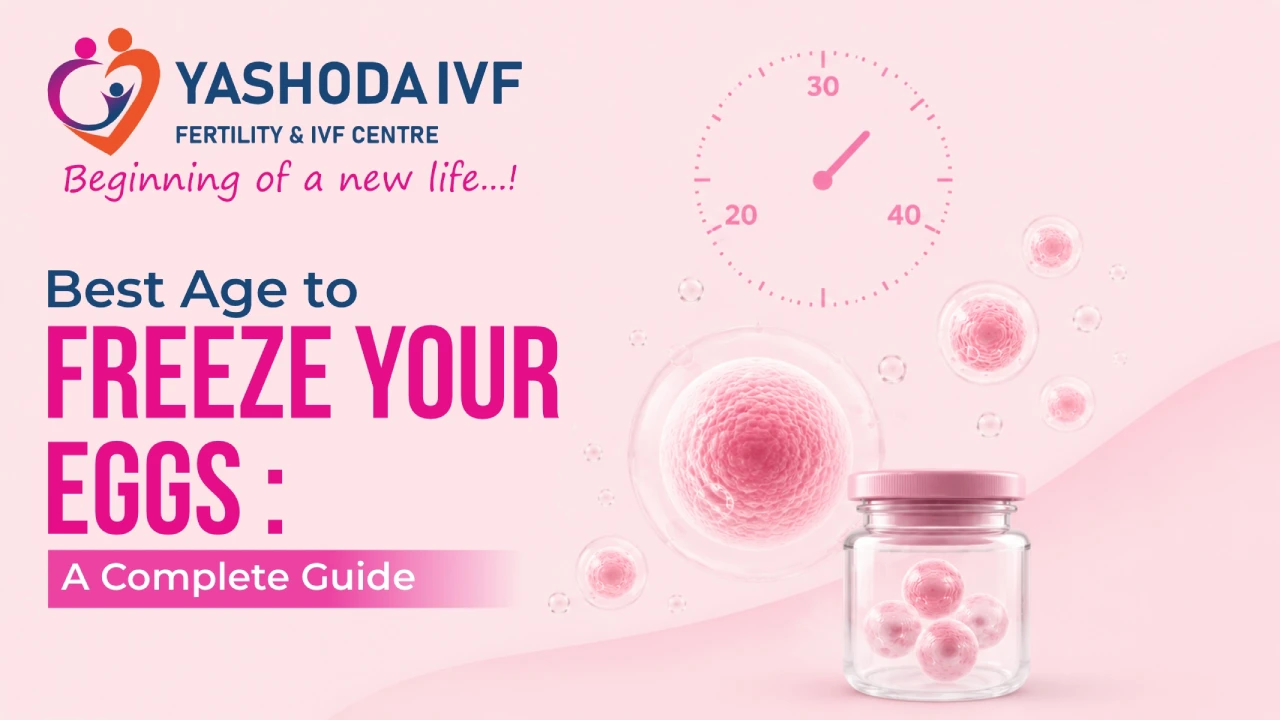
If you're wondering about the best age to freeze eggs, the late 20s to early 30s is generally considered a favourable biological window, as egg quality and ovarian reserve are typically higher during this period than in the later 30s and 40s. That said, the right time depends on your health, ovarian reserve, medical history, and future family plans. Egg freezing may preserve reproductive options; it cannot guarantee pregnancy or a live birth.
Egg freezing, medically called oocyte cryopreservation, is the process of collecting and freezing a woman's mature, unfertilised eggs for possible future use.
Eggs are frozen using vitrification, a rapid-freezing technique that helps protect their delicate structure during freezing and storage. Later, if a woman wants to try for pregnancy, the eggs can be thawed and fertilised with sperm, usually through IVF or ICSI (intracytoplasmic sperm injection), and a resulting embryo may be transferred to the uterus.
Know more about: What Is the Difference Between IVF and ICSI?
From a biological perspective, the late 20s to early 30s are often considered a favourable period for egg freezing because egg quality and ovarian reserve are generally higher than at later ages. There's no single age that's correct for every woman, though it helps to separate two ideas:
These don't always align, and that's normal. A fertility assessment, including an AMH test, can show where you currently stand rather than relying on age alone.
Ovarian reserve is the number of eggs remaining in the ovaries. Women are born with all the eggs they'll ever have, and this number naturally declines with age, gradually through the 20s and 30s, and more noticeably from the mid-30s onward. Ovarian reserve tests (AMH, antral follicle count) estimate how the ovaries might respond to stimulation, but they don't independently predict pregnancy or live birth.
Egg quality refers to how likely an egg is to fertilise and develop into a healthy embryo. As women age, a higher proportion of eggs may carry chromosomal irregularities, which can affect fertilisation, embryo development, and miscarriage risk. Age provides a general indication of expected egg quality, but it cannot determine the quality of any individual egg. Ovarian reserve tests estimate potential egg yield, not chromosomal normality.
Fertility decline tends to become more noticeable after the mid-30s, though the pace varies considerably between individuals, which is why personal testing matters more than age alone.
Before 25: Egg quality and ovarian reserve are generally favourable, and eggs frozen this early may be stored longer. However, freezing isn't automatically recommended for every woman under 25; there's a real chance the eggs may never be used, and most haven't yet faced the circumstances that typically prompt freezing.
25–30: This range often offers strong biological advantages and flexibility in timing. The decision should still be guided by personal readiness rather than age alone.
30–34: Often a practical window, balancing generally favourable egg quality with the personal and professional readiness that tends to come a little later. Ovarian reserve still varies between individuals, so testing remains useful.
35–37: Decline in egg quantity and quality becomes more noticeable for many women, and more than one stimulation cycle may be needed. Ovarian reserve testing and honest counselling matter more at this stage.
38–40: Freezing remains possible, though yield and quality are typically lower, and multiple cycles may be required. A personalised estimate based on your own testing is more useful than general statistics.
After 40: Potential is generally lower, but not automatically ruled out. Individual medical assessment is essential, and clinic policies vary; transparent counselling matters most here.
| Age at freezing | General egg quality | General ovarian reserve | Possible cycle requirement | Main consideration |
|---|---|---|---|---|
| Under 25 | Generally favourable | Generally favourable | Depends on ovarian response | Eggs may never be used |
| 25–30 | Generally favourable | Generally favourable | May require fewer cycles | Personal readiness and timing |
| 30–34 | Generally favourable | Varies individually | Depends on ovarian response | Practical biological window |
| 35–37 | Declining more noticeably | May be reduced | More than one may be needed | Individual assessment is important |
| 38–40 | Generally lower | Often reduced | Multiple cycles may be needed | Realistic expectations are essential |
| After 40 | Significantly age-dependent | Often lower | Highly individual | Specialist counselling is essential |
These are general age-related patterns and should not be treated as an individual prediction of egg yield, pregnancy or live birth.
"Success rate" can mean different things: eggs retrieved, mature eggs frozen, egg survival after warming, fertilisation, embryo development, clinical pregnancy, or live birth. Always ask whether a quoted number is per egg, per cycle, per patient, or per embryo transfer.
Success rates vary according to age at freezing, the number of mature eggs stored, laboratory performance, and how the outcome is measured. Because planned egg-freezing data remains limited, population statistics cannot reliably predict an individual's chance of live birth. Available evidence suggests that outcomes are generally better when planned egg freezing is performed at a younger age, though current data cannot precisely predict an individual's chance of live birth (ASRM guideline, 2021).
What is well established: age at freezing is an important predictor of future outcomes, younger eggs are generally more likely to be chromosomally normal, and even when younger frozen eggs are used later, the woman's age during the future pregnancy can still affect maternal and pregnancy-related health.
Know more: Positive Signs After Embryo Transfer: Early Pregnancy Clues
There's no single right number; it depends on your age, ovarian reserve, and how many children you hope to have. A few things to understand:
Any age-specific number a clinic gives you is a counselling estimate based on population data, not a guarantee, ideally discussed alongside your own ovarian reserve results.
Common reasons include delaying pregnancy for personal reasons, career or education plans, not currently having the right partner, upcoming cancer treatment or other medical treatment that could affect fertility, endometriosis, planned ovarian surgery, risk of premature ovarian insufficiency, certain genetic conditions, and a family history of early menopause.
Being in one of these groups doesn't automatically mean egg freezing is right for you; eligibility depends on individual evaluation with a fertility specialist.
A full cycle, from starting stimulation to egg retrieval, generally takes around two to three weeks, though this varies with individual response to medication.
Benefits of Egg Freezing: preserving eggs from a potentially more favourable biological stage, greater flexibility in family-building timelines, an option before certain medical treatments that could affect fertility, and keeping eggs unfertilised until you're ready to decide on a partner or sperm source. Egg freezing is a tool that may support future choices, not a guarantee, and not an "insurance policy."
Limitations: it cannot guarantee pregnancy or live birth; multiple cycles may be needed; not every retrieved egg is mature, not every frozen egg survives warming, not every surviving egg fertilises, and not every embryo results in pregnancy. Outcomes depend on age, mature egg number, individual health, and lab factors. A future pregnancy can still carry age-related maternal health considerations, based on the woman's age at that time.
Risks and side effects of Egg Freezing: temporary bloating, mild abdominal discomfort, mood changes during stimulation, bruising at injection sites, and temporary soreness after retrieval. There are small procedure-related risks with retrieval, as with any minor procedure involving sedation. A less common but important risk is ovarian hyperstimulation syndrome (OHSS). Contact your clinic promptly for worsening abdominal swelling, severe pain, breathing difficulty, or very reduced urination. Risk levels vary by individual health and ovarian response, and your specialist will monitor you throughout.
| Factor | Egg freezing | Embryo freezing |
|---|---|---|
| Material stored | Mature, unfertilised eggs | Fertilised embryos |
| Sperm required at freezing | No | Yes |
| Fertilisation timing | After future warming | Before freezing |
| Possible suitability | People preserving unfertilised eggs | Couples choosing to preserve embryos |
| Main consideration | Keeps the fertilisation decision open | Requires fertilisation before storage |
Neither option is universally better; it depends on your relationship status and how ready you are to decide on a future sperm source.
Know more: Egg Freezing vs Embryo Freezing: What Is the Difference?
Work through this with a fertility specialist: your current age, ovarian reserve (based on testing, not assumption), medical history, future family-planning timeline, how many children you hope to have, personal circumstances, any history of endometriosis or ovarian surgery, family history of early menopause, conditions or treatments that may affect fertility, the possible number of cycles you may need, and a clear understanding that egg freezing is not a guarantee.
Earlier consultation may help if you're 35 or older and considering egg freezing, have been told you have low AMH, have irregular cycles, have endometriosis, have had ovarian surgery, have a family history of early menopause, have upcoming chemotherapy or radiotherapy, have a condition or treatment that may affect fertility, or are simply unsure about your ovarian reserve. A consultation is a chance to get clear information, not a commitment to treatment.
The late 20s to early 30s is generally considered a favourable biological window, since egg quality and ovarian reserve tend to be more favourable during this period. There's no single right age for everyone; personal health, ovarian reserve, and family plans matter too.
Yes, 30 generally falls within a favourable window for egg quality and ovarian reserve. Many women in their early 30s respond well to stimulation, though individual testing is still recommended.
No, but egg quantity and quality typically decline more noticeably after the mid-30s. Freezing remains a valid option at 35 and beyond, sometimes requiring more than one stimulation cycle.
Yes, for many women, though yield and quality are generally lower than at younger ages. Individual medical assessment is essential, and clinic policies vary.
There is no single universal age limit. Medical suitability depends on ovarian reserve, general health, expected benefit, and the individual clinic's policy.
Younger eggs generally offer better biological potential, and the late 20s to early 30s is often a favourable period for egg freezing. But there's no single right age for everyone; the best time depends on your health, ovarian reserve, medical history, and future family-building plans. Egg freezing can preserve reproductive options, but it cannot guarantee pregnancy or a live birth. An individual fertility assessment offers more useful guidance than general age statistics. If you're considering egg freezing, book a consultation with a Yashoda IVF fertility specialist to understand your ovarian reserve and discuss what timing may work best for you.
This article is for general educational purposes only and does not replace personalised medical advice, diagnosis, or treatment. Egg freezing outcomes vary between individuals, and no outcome can be guaranteed. Please consult a qualified fertility specialist for guidance specific to your health.