Fertility Tips

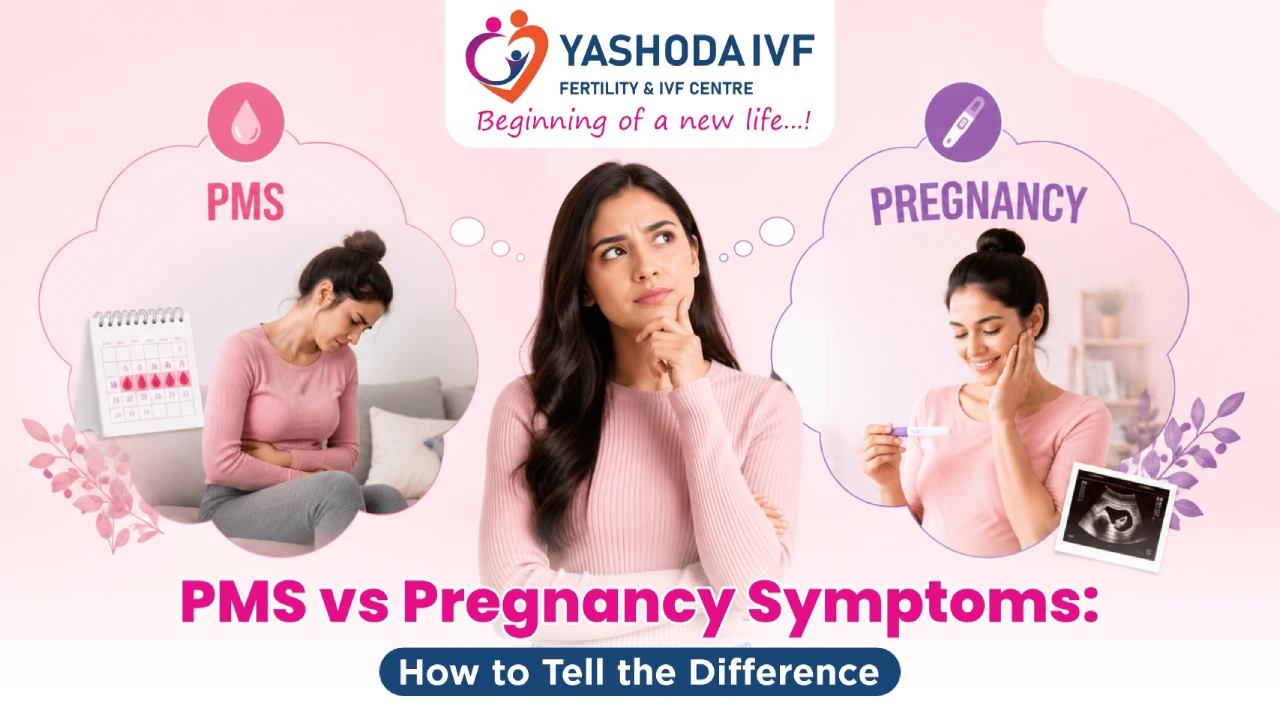
If your period is due soon and you're feeling crampy, tired, and a little moody, it's natural to wonder: is this just PMS, or could I be pregnant? The honest answer is that PMS vs pregnancy symptoms can look almost identical in the first week or two; shifting hormones drive both, and both can cause sore breasts, bloating, and mood swings. The only way to know for certain is a pregnancy test, but a few subtle differences can offer useful clues while you wait.
PMS stands for Premenstrual Syndrome. "Premenstrual" simply means "before the period," and "syndrome" refers to a recurring group of physical and emotional changes that show up in the days before menstruation starts. PMS is caused by the natural rise and fall of estrogen and progesterone in the second half of the menstrual cycle, and it typically fades once your period begins.
Because PMS involves the same two hormones that also rise in early pregnancy, it's genuinely difficult to tell the two apart just by how you feel, which is exactly why "signs of period vs pregnancy" is one of the most commonly searched fertility-related questions.
Both PMS and early pregnancy commonly involve:
Some women also notice changes in taste, food aversions, or feel that certain smells seem stronger during early pregnancy; specifically, this is a recognized pregnancy-related change, though it isn't well established as a typical PMS symptom. Given how much overlap there already is in the list above, it's genuinely hard to use any single symptom on its own as proof of pregnancy. What tends to help more is looking at timing, intensity, and how the symptom behaves once your period is due, which is what the next section breaks down.
| Symptom | PMS | Early Pregnancy |
|---|---|---|
| Missed period | Does not occur; period arrives as expected | A common early clue for those with regular cycles, though not universal and can be misleading with irregular cycles |
| Timing | Starts 1-2 weeks before period; fades once bleeding begins | May start 1-2 weeks after conception; some notice nothing at all |
| Breast changes | Tenderness eases once period starts | Tenderness may linger longer; breasts may feel fuller, areolas may darken |
| Bleeding | No spotting before period; normal flow when it arrives | Light spotting (implantation bleeding) possible in some, not all, pregnancies |
| Nausea | Uncommon | Fairly common ("morning sickness"), often starting around 4-9 weeks, though not everyone experiences it |
| Cramping | Often stronger, right before period, easing once bleeding starts | Usually milder, more sporadic, when present |
| Mood changes | Resolves once period begins | May continue beyond the expected period date, though not everyone notices this |
| Fatigue | Present but usually temporary | Often described as more noticeable by those who experience it |
The single most useful pattern to remember: for someone with regular cycles, a missed period is an important early clue, and PMS symptoms generally fade once bleeding starts. That said, not everyone pregnant notices strong or lasting symptoms; some people have very few or none at all.
This is one of the most commonly confused symptoms, so it deserves its own closer look.
Period cramps are usually stronger, concentrated low in the abdomen or lower back, and typically peak in the day or two right before your period starts, then ease off as bleeding continues.
Early pregnancy cramps, when they occur, are often described as milder, more of a dull pulling or stretching sensation, and can happen on and off rather than building to a peak. Some are linked to the embryo implanting in the uterine lining, though this can't be confirmed without a pregnancy test, and many pregnant women don't notice distinct cramping at all.
If cramping is accompanied by heavy bleeding, dizziness, or pain severe enough to affect daily activities, it's worth speaking with a fertility specialist or gynaecologist rather than waiting it out.
PMS doesn't typically cause any bleeding or spotting before your period; you either get your normal flow, or nothing at all.
Implantation bleeding, a possible early pregnancy sign, is sometimes described as light spotting occurring roughly 6-12 days after conception. However, not everyone who is pregnant notices this, and its appearance, amount, and timing can vary a lot from person to person, so it isn't something that can be reliably identified by color or timing alone.
If you notice any unusual spotting alongside other signs, or if you're simply unsure, taking a pregnancy test is a more reliable next step than trying to interpret the bleeding pattern by its appearance.
Yes. It's a common misconception that pregnancy always comes with noticeable early signs; in reality, some women notice very little or nothing at all in the first few weeks, and only find out after a missed period prompts them to test. The absence of symptoms doesn't rule pregnancy out, just as the presence of PMS-like symptoms doesn't rule it in. If there's any chance of pregnancy and your period is late, a pregnancy test remains the most reliable way to know, regardless of how you're feeling.
Several other health factors can influence or mimic both PMS-type and early-pregnancy-type symptoms, which is worth keeping in mind if your patterns feel unusual:
If your cycles are consistently irregular or your symptoms don't fit the usual pattern, a fertility check-up can help clarify what's actually going on, rather than relying on guesswork.
Read Here: What Is Ovulation? Signs, Symptoms & Fertility Guide
Since symptoms alone can't give you a definitive answer, timing your test correctly matters:
If you've had persistent negative results along with a late or absent period, or your irregular periods make timing hard to judge, a fertility check-up can help identify what's actually going on rather than continuing to guess.
Read the Hindi blog: प्रेगनेंसी टेस्ट कब करें? सही समय जानें (Best Time to Test Pregnancy)
What Is PCOS? Signs, Causes, Diet & Fertility Help
PMS stands for Premenstrual Syndrome, a group of physical and emotional symptoms that occur in the days before a period due to natural hormonal changes.
Both cause breast tenderness, cramping, mood swings, and fatigue. A missed period (for those with regular cycles) and nausea lean somewhat more toward pregnancy, though not everyone experiences these clearly.
Not exactly. Once pregnancy occurs, a person is no longer experiencing PMS itself, since PMS is specifically tied to the premenstrual phase of a non-pregnant cycle. What actually happens is that early pregnancy can produce symptoms that feel very similar to PMS, like breast tenderness, mood changes, and fatigue, which is exactly why the two are so easily confused in the first week or two.
It can be either, and color or timing alone isn't enough to tell them apart reliably. Spotting patterns vary a lot between individuals and even between pregnancies. If you notice spotting along with other possible signs, or if you're simply unsure, a pregnancy test is a more dependable way to find out than trying to interpret the bleeding itself.
This varies significantly from person to person. Some notice subtle changes early on, but many people notice nothing distinct until after a missed period, and some notice very little throughout. No fixed timeline applies to everyone, and absence of early symptoms is common.
PMS and early pregnancy symptoms overlap so much that it's genuinely difficult to tell them apart just by how you feel. A missed period is a useful early clue for those with regular cycles, but it's just one piece of the picture. Some pregnant women notice several symptoms, while others notice almost none. If you're still unsure after taking a home pregnancy test, or if your periods are irregular and hard to track, speaking with a fertility specialist can help you get a clear, accurate answer.
If you'd like a proper evaluation to confirm a pregnancy, understand irregular periods, or address ongoing fertility questions, visit your nearest Yashoda IVF centre for personalised guidance.
Disclaimer: The information provided in this blog is for educational and informational purposes only and is not intended as a substitute for professional medical advice, diagnosis, or treatment. Every individual's fertility journey is unique.