Female Infertility
Understanding your body is the first step toward understanding your fertility. Among all the terms you'll hear when learning about the menstrual cycle, "ovulation" is one of the most important, yet many women aren't entirely sure what it means or how it affects their chances of conceiving. This guide from Yashoda IVF covers the meaning of ovulation, its symptoms, timing, and how to track it so you can take charge of your reproductive health.
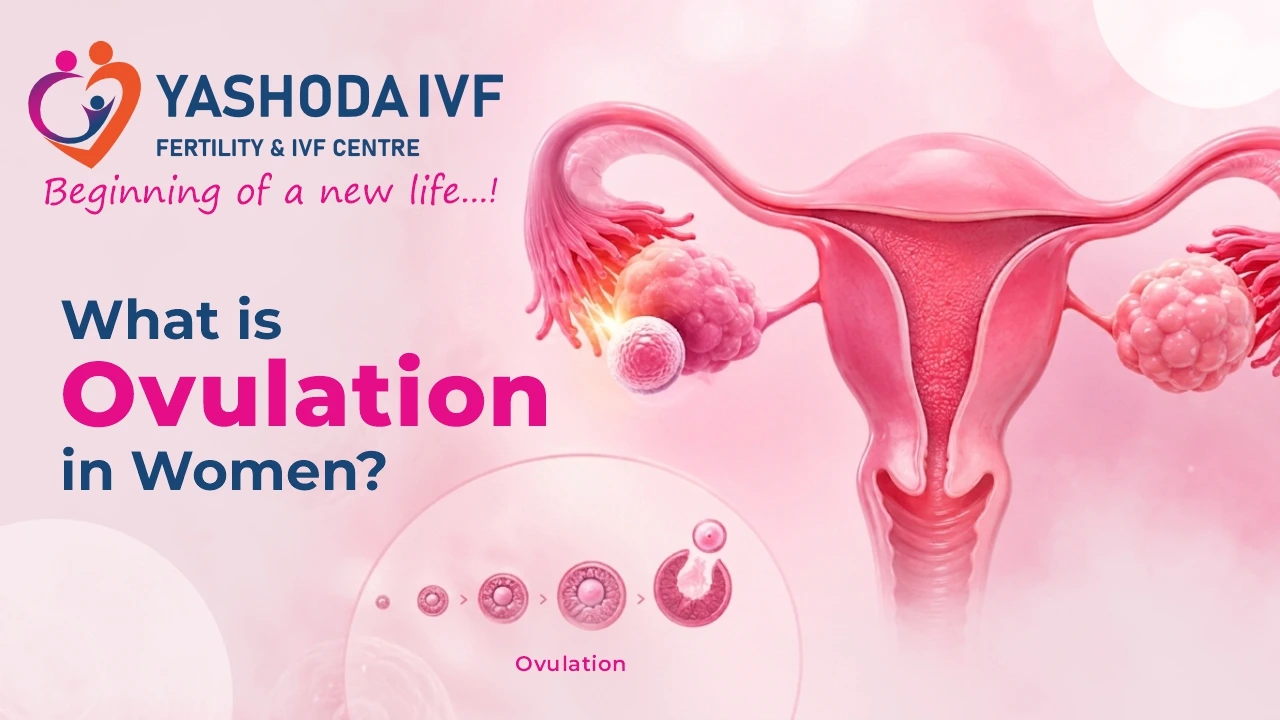
In the simplest terms, ovulation is the release of a mature egg from an ovary. This egg then moves into the fallopian tube, where it remains viable for about 12 to 24 hours. If sperm is present during this time, fertilization can occur, potentially resulting in pregnancy. If the egg isn't fertilized, it breaks down, and the body prepares to shed the uterine lining, which leads to the next menstrual period.
Ovulation is controlled by a delicate balance of hormones, primarily follicle-stimulating hormone (FSH) and luteinizing hormone (LH), that work together to mature and release the egg each cycle.
Many people assume ovulation always occurs on day 14, but this is only accurate for women with a perfectly 28-day cycle. In reality, cycle lengths vary widely, anywhere from 21 to 35 days is considered normal, so the timing of ovulation shifts accordingly.
A more reliable way to think about it: ovulation usually occurs roughly two weeks before your next period starts, regardless of how long your cycle is. This is why tracking your own cycle history is far more useful than relying on a generic calendar estimate.
The fertile window is the stretch of days in your cycle when conception is possible. Sperm can survive in the reproductive tract for up to five days, while an egg survives only about a day after release. This means the fertile window includes the five days before ovulation plus the day of ovulation itself, roughly six days each cycle.
For couples trying to conceive, the best time to get pregnant is during the two to three days leading up to and including ovulation. Having intercourse during this window offers the highest probability of conception each month.
Your body often gives clear hints when ovulation is near. Common signs of ovulation and ovulation symptoms include:
These symptoms vary a lot from woman to woman, and some experience almost none of them at all, which is perfectly normal.
If you want to know how to calculate ovulation day, there are several approaches you can combine for better accuracy:
To make this easier, you can also try our free ovulation calculator to quickly estimate your most fertile days based on your cycle length.
Learning how to track ovulation consistently, rather than relying on one method alone, gives the clearest picture of your fertility pattern. A combined approach might look like this:
Over two or three cycles, patterns usually become much clearer, making future predictions more reliable.
Not all women have predictable ovulation. Irregular ovulation, where the timing shifts unpredictably from month to month, can result from stress, sudden weight changes, thyroid conditions, or hormonal fluctuations.
In some cycles, ovulation may not happen at all, a condition known as anovulation. This often shows up as missed, irregular, or unusually light or heavy periods. A leading cause of anovulation is Polycystic Ovary Syndrome (PCOS), a hormonal condition affecting how the ovaries function. The link between PCOS and ovulation is significant: women with PCOS often have elevated androgen levels and multiple small follicles that fail to mature and release an egg regularly, which can make conceiving more difficult without medical support.
Other potential causes of anovulation include:
Read this Blog: What is PCOS? Signs, Causes, Diet & Fertility Help
Ovulation is when a mature egg is released from the ovary, making pregnancy possible if it meets sperm within about 24 hours. It happens once each menstrual cycle, triggered by a surge in luteinizing hormone (LH).
In a typical 28-day cycle, ovulation usually occurs around day 14. However, cycle length varies from woman to woman, so ovulation can happen anywhere between day 11 and day 21, depending on your individual cycle.
The most noticeable signs include clear, stretchy ovulation discharge (similar to egg whites), mild one-sided pelvic pain, a slight rise in basal body temperature, breast tenderness, and increased libido. Not every woman experiences all or any of these symptoms.
You can estimate your ovulation day by tracking your cycle length over a few months, using ovulation predictor kits (OPKs) that detect the LH surge, monitoring cervical mucus changes, or charting your basal body temperature each morning.
Yes. PCOS (Polycystic Ovary Syndrome) is one of the leading causes of irregular ovulation and anovulation (when no egg is released). It can cause unpredictable cycles and make conception more challenging, but it's often manageable with the right medical guidance and treatment.
Read This Blog: Follicular Study: Know everything about the process, success rate & importance
If you notice consistently irregular cycles, missed periods, severe pain, or have been trying to conceive for 12 months (or 6 months if you're over 35) without success, it's worth speaking to a fertility specialist. Many ovulation-related concerns, including PCOS and anovulation, respond well to lifestyle adjustments, medication, or assisted reproductive treatments when diagnosed early.
Read This Blog: What is the AMH Test for females? Levels, Cost & Results
Ovulation is central to female fertility, and understanding it from the fertile window to the physical signs your body gives off can make a real difference whether you're trying to conceive or simply want better insight into your cycle. If you're dealing with irregular ovulation, PCOS, or unexplained difficulty getting pregnant, the team at Yashoda IVF is here to guide you with expert, personalized care.
Disclaimer: This blog is intended for general informational purposes and should not replace professional medical advice. Please consult a qualified healthcare provider for any concerns about your reproductive health.