Fertility Tips

Ovulation is the process in which one of your ovaries releases an egg. It usually happens once during each menstrual cycle. The days around ovulation are the most fertile days, when the chances of pregnancy are higher. In this guide, you will learn how to calculate your ovulation date, understand your fertile window, and know when a simple calendar estimate may not be enough.
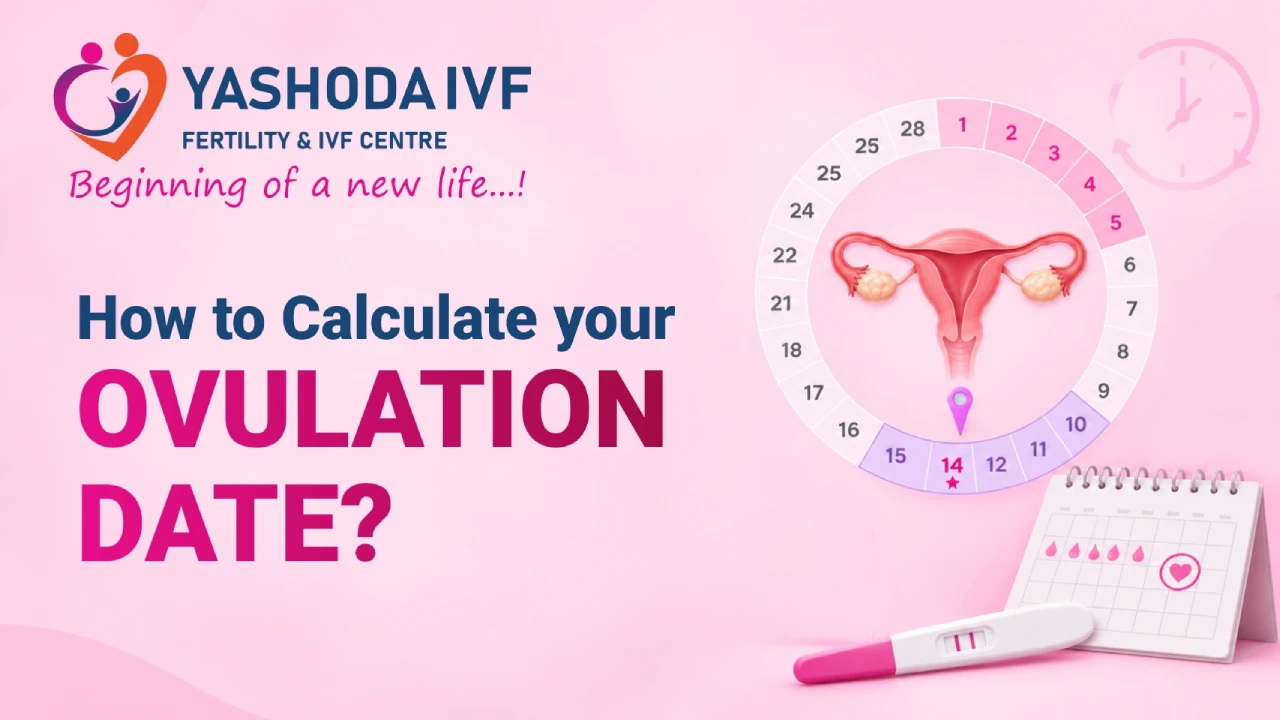
Ovulation usually happens about 14 days before your next period, not always on Day 14 of your cycle. You can estimate your ovulation date by subtracting 14 days from your usual cycle length. For example, if your cycle is 30 days long, ovulation may happen around Day 16. Your fertile window usually includes the five days before ovulation and the day of ovulation.
The ovulation period is the time in your cycle when an egg is released, and pregnancy is most likely. The egg survives for only about 12 to 24 hours after release. Sperm can survive for up to 5 days, so intercourse in the days before ovulation can also lead to pregnancy. That is why the fertile window is about 6 days long.
You need two things: the first day of your last period and your usual cycle length.
For a 28-day cycle, ovulation falls around Day 14. For a 35-day cycle, it falls around Day 21. If you track several cycles and use your average length, the estimate is more reliable. Online ovulation calculators use the same calculation to estimate your date.
Use this tool: ovulation calculators
A calendar gives an estimate only. These methods can add more clues:
When periods are irregular, calendar calculations become less reliable. LH (luteinizing hormone) kits and cervical-mucus changes may provide additional clues, but they may not confirm ovulation in every case. A doctor may recommend follicular ultrasound or hormone tests when more accurate assessment is needed.
Read Here: Period Late Kyun Hota Hai? Pregnancy Ke Alawa 10 Karan
Consider a consultation if:
A doctor can check whether you are ovulating and suggest the right next steps. A fertility evaluation does not automatically mean treatment such as IVF (In Vitro Fertilization).
Pregnancy is most likely during the fertile window. Chances are very low after ovulation, but timing varies, so a calendar alone is not a safe way to avoid pregnancy.
No. Day 14 applies to an average 28-day cycle. Your ovulation day depends on your cycle length and can change from month to month.
The egg lives for about 12 to 24 hours. The fertile window is longer, about 6 days, because sperm can survive for several days.
If you are trying to conceive or unsure whether you are ovulating, our team can guide you. You can consult a gynaecologist or fertility specialist at Yashoda IVF & Fertility Centre.
Disclaimer: This article is for education only. It does not replace medical advice, diagnosis, or treatment, and it is not a method of contraception.