Female Infertility

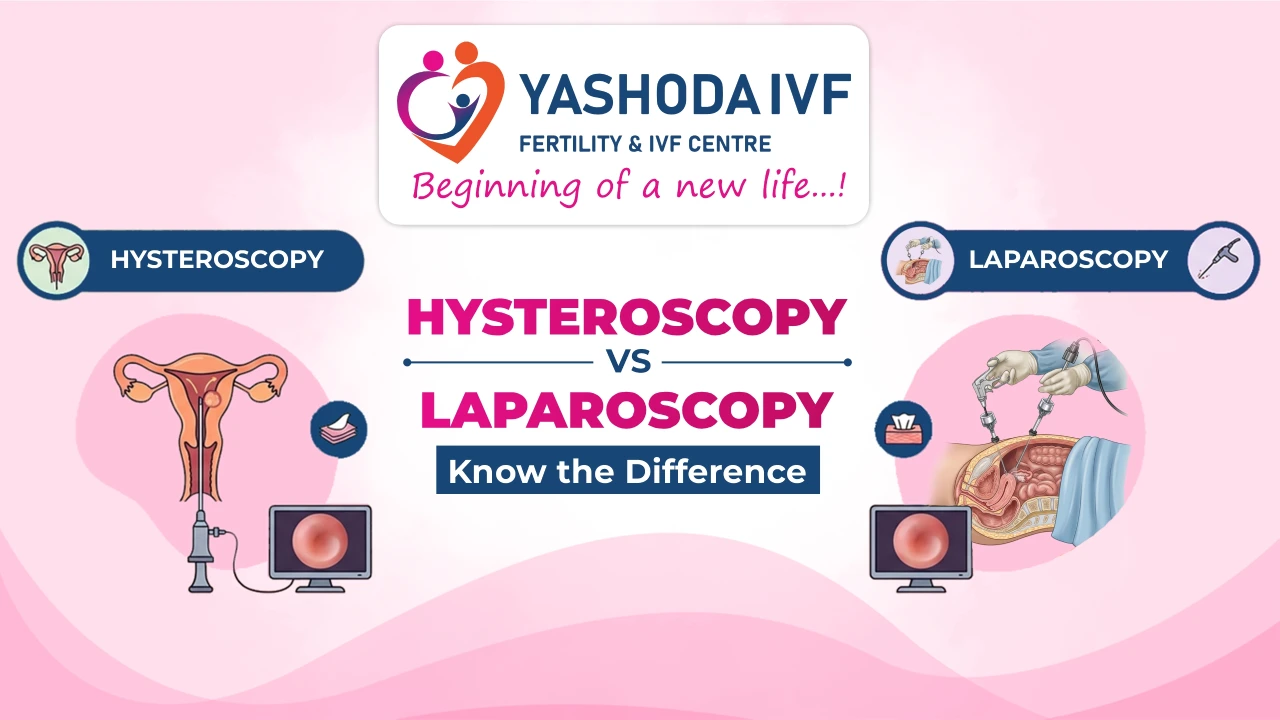
Hysteroscopy and laparoscopy are two procedures used to examine different parts of the female reproductive system. Hysteroscopy looks inside the uterus through the vagina and cervix. Laparoscopy looks at the uterus, ovaries, fallopian tubes, and other areas of the pelvis through small cuts in the abdomen.
Both procedures can help a doctor find and sometimes treat certain health problems. However, they are not used for the same purpose. The right procedure depends on your symptoms, test results, medical history, and the area that needs to be examined.
In simple terms: Hysteroscopy looks inside the uterus and does not require abdominal cuts. Laparoscopy looks at the reproductive organs from outside and requires small cuts in the abdomen.
Hysteroscopy is a procedure that allows a doctor to look directly inside the uterus, also called the uterine cavity.
The doctor uses a thin instrument called a hysteroscope. It has a small camera and light at the end. The hysteroscope is passed through the vagina and cervix into the uterus. Images from the camera appear on a screen, allowing the doctor to examine the inner lining and shape of the uterus.
Hysteroscopy does not require a cut on the abdomen. It may be used only to examine the uterus or to treat a problem at the same time.
Diagnostic hysteroscopy is used to look for a problem inside the uterus. Operative hysteroscopy uses small instruments to treat abnormal tissue. In selected cases, a doctor may be able to identify and treat a problem during the same procedure.
A doctor may recommend hysteroscopy to investigate or treat:
Hysteroscopy provides a direct view of the uterine cavity. However, it is not automatically needed for every woman experiencing infertility or preparing for IVF (In Vitro Fertilization).
Laparoscopy is a type of keyhole surgery that allows a doctor to examine the organs inside the abdomen and pelvis.
The doctor makes a small cut, usually near the belly button, and inserts a thin instrument called a laparoscope. The laparoscope has a camera and light that send images to a screen.
Carbon dioxide gas is gently introduced into the abdomen. This creates space between the abdominal wall and the organs, helping the doctor see the area more clearly. One or more additional small cuts may be needed if treatment is performed.
Laparoscopy can be used to examine:
Diagnostic laparoscopy looks for a condition that may not be clearly visible on a scan. Operative laparoscopy allows the doctor to treat certain conditions using small instruments passed through the abdominal cuts.
Laparoscopy may be considered to investigate or treat:
Laparoscopy can provide useful information, but it is still surgery. It is not usually the first test used in a routine fertility evaluation.
The main difference between hysteroscopy and laparoscopy is the area each procedure examines.
| Feature | Hysteroscopy | Laparoscopy |
|---|---|---|
| Area examined | Inside the uterus | Pelvis and outside of the reproductive organs |
| Entry route | Through the vagina and cervix | Through small cuts in the abdomen |
| Abdominal cuts | Not required | Required |
| Instrument | Hysteroscope | Laparoscope |
| Common uses | Polyps, uterine scar tissue, uterine septum and fibroids inside the uterine cavity | Endometriosis, ovarian cysts, pelvic adhesions and some tubal problems |
| Anaesthesia | Depends on the type and setting | Usually general anaesthesia |
| Diagnostic or operative | Can be either | Can be either |
| Usual recovery | Generally shorter | Generally longer than hysteroscopy |
| External scar | No abdominal scar | Small abdominal scars may remain |
Neither procedure is better in every situation. They examine different areas and answer different medical questions.
The process may differ depending on why the procedure is being performed. It generally involves these steps:
A simple diagnostic hysteroscopy may take around 10 to 15 minutes. It can take longer if a tissue sample is collected or treatment is performed. The actual time varies from one patient to another.
Laparoscopy is usually performed in an operating room under general anaesthesia, which means you are asleep during the procedure.
The usual steps include:
Preparation instructions depend on your health and the planned procedure. They may include:
Do not stop blood thinners or other prescribed medicines without speaking to your doctor.
The timing of hysteroscopy may be planned around your menstrual cycle. In many cases, it is performed after menstrual bleeding has ended, but the best timing depends on why the procedure is needed.
Know More: IVF Diet Plan: Foods to Eat & Avoid During Treatment
The experience is different for every person. Some women feel mild period-like cramps, while others may feel more discomfort. Pain can depend on the type of hysteroscopy, whether treatment is performed, and the pain relief used.
Pain control may include pain-relieving medicine, local anaesthesia, sedation or general anaesthesia. Some short diagnostic procedures may be performed without anaesthesia.
If you are worried about pain, ask what relief will be available. Tell the medical team if an outpatient hysteroscopy becomes too painful.
You should not feel pain during laparoscopy because it is usually performed under general anaesthesia.
After the procedure, you may experience:
Shoulder-tip pain can happen because the gas used during surgery may temporarily irritate the diaphragm, a muscle below the lungs. It usually improves as the body absorbs the remaining gas.
Read This: HSG Test Kya Hota Hai? प्रक्रिया, दर्द और रिपोर्ट
Recovery is usually faster after a diagnostic procedure than after a procedure in which treatment or surgery is also performed.
After hysteroscopy, you may have mild cramps, light bleeding or watery discharge for a short time. Many patients return to their normal activities on the same day or within one or two days after a simple diagnostic procedure.
Recovery may take longer after operative hysteroscopy or general anaesthesia.
Recovery after laparoscopy is generally longer because it involves abdominal cuts and general anaesthesia. Some patients return to usual activities within several days or about one week after a diagnostic laparoscopy.
Recovery may take two weeks or longer when more extensive treatment is performed. Other health conditions can also affect healing.
Your doctor will tell you when you can safely return to work, drive, exercise, have intercourse, and continue fertility treatment. Follow the instructions given for your particular procedure rather than relying on one fixed recovery period.
Hysteroscopy is generally considered safe, but every medical procedure has possible risks.
Potential complications include:
The likelihood of a complication depends partly on whether the procedure is diagnostic or operative and on the treatment being performed.
Possible risks of laparoscopy include:
Serious complications are uncommon, but your doctor should explain the possible benefits and risks before you agree to the procedure.
Know More: Endometriosis vs Adenomyosis: Symptoms & Differences
Hysteroscopy and laparoscopy may be considered when symptoms, examination findings or previous test results suggest a specific problem.
Hysteroscopy may help identify problems inside the uterus, such as polyps, scar tissue, a uterine septum or fibroids that grow into the uterine cavity.
Laparoscopy may help diagnose pelvic conditions such as endometriosis, ovarian cysts, pelvic adhesions or damaged fallopian tubes.
Neither procedure is automatically necessary for every woman experiencing infertility. Doctors often begin with less invasive tests, such as:
The decision depends on your symptoms, age, previous treatments, test results, and pregnancy plans.
No, hysteroscopy and laparoscopy are not routinely required before every IVF cycle.
A doctor may consider hysteroscopy when an ultrasound or another test suggests a problem inside the uterus. It may also be considered in selected cases involving abnormal bleeding, repeated miscarriages or a suspected uterine abnormality.
Laparoscopy may be considered when there is suspected endometriosis, persistent pelvic pain, an ovarian cyst, hydrosalpinx or another pelvic condition that could affect the treatment plan.
Before undergoing either procedure, you can ask your doctor:
Treating a confirmed problem may support fertility in selected patients, but hysteroscopy or laparoscopy cannot guarantee pregnancy or IVF success.
Yes, the two procedures can sometimes be performed during the same session.
A combined procedure allows the doctor to examine both the uterine cavity and the surrounding pelvic organs. For example, hysteroscopy may be used to remove a uterine polyp while laparoscopy is used to investigate suspected endometriosis.
Doing both together may avoid a second hospital visit and another round of anaesthesia. However, a combined procedure is only appropriate when there is a clear medical reason to examine or treat both areas.
The following table provides general guidance:
| Possible condition or concern | Procedure that may be considered |
|---|---|
| Uterine polyp | Hysteroscopy |
| Fibroid growing into the uterine cavity | Hysteroscopy |
| Scar tissue inside the uterus | Hysteroscopy |
| Uterine septum | Hysteroscopy |
| Suspected endometriosis | Laparoscopy |
| Ovarian cyst requiring surgery | Laparoscopy |
| Pelvic adhesions | Laparoscopy |
| Hydrosalpinx or certain tubal problems | Laparoscopy |
| Need to examine both the uterine cavity and pelvis | Combined procedure may be considered |
This table provides general information and is not an individual treatment recommendation.
Contact your medical team if you experience:
Your medical team may provide additional warning signs based on the procedure performed.
Hysteroscopy examines the inside of the uterus through the vagina and cervix without abdominal cuts. Laparoscopy examines the reproductive organs and pelvis through small cuts in the abdomen. They are used to investigate different conditions.
Hysteroscopy generally has a shorter recovery because it does not require abdominal cuts. Recovery after laparoscopy usually takes longer because it involves small incisions and general anaesthesia. The exact recovery time depends on whether treatment was performed.
They may support fertility in selected patients when they identify and treat a problem associated with difficulty conceiving. The result depends on the condition treated, age, and other fertility factors. Neither procedure guarantees pregnancy.
Yes. They may be performed together when a doctor needs to examine or treat both the inside of the uterus and the surrounding pelvic organs. A combined procedure is not necessary for everyone.
No. Neither procedure is routinely required before every IVF cycle. One may be recommended when symptoms or test results suggest a condition that could affect the treatment plan.
Hysteroscopy and laparoscopy examine different parts of the reproductive system. Hysteroscopy looks inside the uterus without abdominal cuts, while laparoscopy examines the pelvic organs through small cuts in the abdomen.
The right procedure depends on the suspected condition, previous test results, and whether treatment is required. If you have concerns about your fertility or have been advised to undergo either procedure, you can consult a fertility specialist at Yashoda IVF to understand why it may be recommended, what it can detect, and how the results may affect your treatment plan.
This article is intended for general educational purposes and does not replace diagnosis or treatment from a qualified medical professional. Speak with your doctor for advice based on your symptoms, medical history, and fertility plans.