Female Infertility

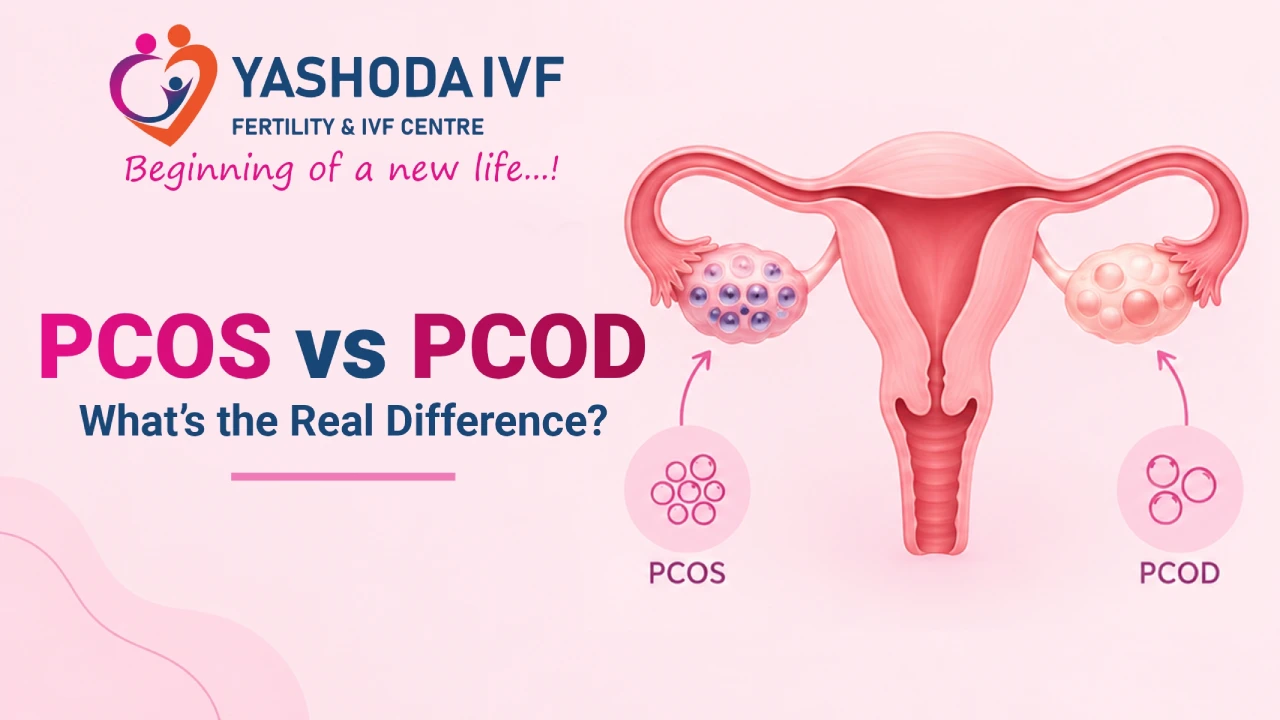
PCOD and PCOS are often used to mean the same thing in India. However, PCOS is the medically recognised condition, while PCOD does not have a separate, universally accepted set of rules for diagnosis. In 2026, PCOS was renamed PMOS (Polyendocrine Metabolic Ovarian Syndrome) to better explain how it can affect hormones, metabolism, and reproductive health.
Many websites say that PCOD is mild and PCOS is more serious. However, this is not always true. The effects can vary from person to person depending on periods, hormone levels, metabolism, fertility, and test results. The name alone does not tell you how serious the condition is.
In this guide, you will learn about the difference between PCOD and PCOS, their common symptoms, how doctors diagnose them, available treatments, and how they may affect pregnancy.
In India, PCOD is a commonly used short form of Polycystic Ovarian Disease. People often use this term to describe problems such as irregular periods, hormonal changes, irregular ovulation, or multiple small follicles in the ovaries.
PCOD is not widely recognised as a separate medical diagnosis in international guidelines. Doctors and patients may use the term informally or use it to refer to PCOS.
The small structures seen in the ovaries during an ultrasound are usually developing follicles, not harmful growths or actual cysts. An ultrasound alone cannot confirm PCOS. Doctors consider symptoms, medical history, and test results before making a diagnosis.
Read our detailed guide on PCOD meaning in Hindi.
PCOS stands for Polycystic Ovary Syndrome. It is a hormonal, metabolic, and reproductive condition that may affect:
PCOS was renamed Polyendocrine Metabolic Ovarian Syndrome (PMOS). The new name reflects that the condition affects more than the ovaries and does not always involve polycystic-looking ovaries.
The terminology is still transitioning, so patients and doctors may currently use both PCOS and PMOS.
| Question | PCOD | PCOS/PMOS |
|---|---|---|
| How is the term used? | Commonly used in India | Recognised medical syndrome |
| Is it a separate diagnosis? | No universally accepted separate criteria | Established diagnostic criteria are available |
| Is it always milder? | No | Severity differs from person to person |
| Can it affect ovulation? | The term may be used for irregular ovulation | Irregular or absent ovulation is common |
| Can it affect fertility? | It may, depending on the underlying problem | It can make conception difficult when ovulation is irregular |
Symptoms are different for every woman. Common signs include:
Having one symptom does not confirm PCOS. Thyroid disorders, high prolactin, and other hormonal conditions can produce similar symptoms.
The exact cause is not fully known. Genetics and complex hormonal and metabolic factors are believed to contribute.
Poor lifestyle does not independently cause PCOS. However, nutrition, physical activity, sleep and stress can influence its symptoms and metabolic effects. PCOS can affect women of every body size.
It is not medically accurate to decide severity from these labels alone because PCOD is not separately defined by accepted diagnostic criteria.
A doctor will consider:
Someone with few visible symptoms may still have metabolic concerns, while another woman with acne or unwanted hair may have normal glucose results. An individual assessment is therefore necessary.
There is no single test for PCOS. After ruling out similar conditions, doctors commonly diagnose it when an adult has at least two of these three features:
AMH must not be used alone to diagnose PCOS or predict egg quality. If irregular cycles and androgen excess are already present, an ultrasound or AMH test may not be required.
Diagnosis in teenagers requires extra caution because acne and irregular cycles can occur normally during puberty.
| Test | Why might it be advised? |
|---|---|
| Medical and menstrual history | To understand cycles, ovulation, and symptoms |
| Androgen blood tests | To check for excess androgen activity |
| TSH and prolactin | To rule out thyroid and prolactin-related conditions |
| Pelvic ultrasound | To assess the ovaries and pelvic organs when appropriate |
| AMH | To support ovarian-morphology assessment in selected adults, not as a standalone test |
| Glucose, HbA1c or glucose tolerance test | To assess diabetes and metabolic risk |
| Lipid profile and blood pressure | To assess cardiovascular risk factors |
Read more about the AMH test in Hindi.
Treatment depends on symptoms, metabolic health, and whether pregnancy is currently planned.
A doctor may recommend:
These options manage symptoms; they do not permanently cure the syndrome.
Both partners should be assessed before selecting treatment. The plan may include:
For women with PCOS-related anovulatory infertility and no other major fertility factor, letrozole is commonly recommended as the first-line medicine for ovulation induction. Fertility medicines should only be used under medical supervision.
Yes. Many women conceive naturally or with treatment. PCOS mainly affects fertility when ovulation is irregular or absent, making the fertile window difficult to predict.
Pregnancy chances also depend on age, ovarian function, fallopian-tube health, sperm parameters, uterine health, and other conditions such as endometriosis.
PCOS does not automatically mean IVF is required. Some women conceive after ovulation induction and timed intercourse, while others may need IUI or IVF treatment.
Seek a fertility assessment:
Women with PCOS may have a higher risk of:
These complications are not certain to occur. Preconception assessment, glucose screening and regular antenatal care can help identify and manage risks.
Women with PCOS may respond strongly to ovarian-stimulation medicines, but producing more eggs does not guarantee better egg quality, embryo quality, or pregnancy.
Careful monitoring and a personalised stimulation protocol are important because some women with PCOS have a higher risk of ovarian hyperstimulation syndrome (OHSS).
IVF success also depends on:
There is currently no permanent cure for PCOS/PMOS, but symptoms and associated risks can usually be managed effectively.
Helpful measures may include:
Extreme diets are unnecessary. A doctor or qualified dietitian can recommend a plan based on your health and fertility goals.
Consult a gynaecologist or fertility specialist if you have:
Prompt medical attention is advisable for sudden severe pain or very heavy bleeding.
The fertility specialists at Yashoda IVF can evaluate your symptoms, ovulation, and fertility factors and recommend a personalised plan. Book a consultation today.
PCOD and PCOS are not medically established as two stages of one disease. Symptoms can change over time, so worsening menstrual or androgen-related problems should be reassessed.
Yes. Many women conceive naturally, especially when ovulation occurs. Others may need ovulation-induction medicine, IUI, or IVF depending on age and other fertility factors.
No. A woman can have PCOS without polycystic-looking ovaries. The "cysts" commonly discussed in PCOS are usually small developing follicles.
No. AMH should not be used as a standalone diagnostic test. It must be interpreted with menstrual history, androgen findings, and other clinical information.
In 2026, PCOS was renamed Polyendocrine Metabolic Ovarian Syndrome (PMOS) to better reflect its hormonal, metabolic, and reproductive nature.
Medical disclaimer: This article provides general educational information and is not a substitute for diagnosis or treatment by a qualified medical professional. Please consult a gynaecologist, endocrinologist or fertility specialist for personalised advice.