Female Infertility
For many couples, the journey to parenthood comes with unexpected detours. When ultrasounds, hormone panels, and semen analysis all come back “normal” yet pregnancy still isn’t happening, doctors often need a closer look inside the pelvis. This is exactly where laparoscopic surgery becomes one of the most valuable tools in modern fertility care. It allows a specialist to both see and treat hidden problems in a single, minimally invasive procedure, often improving the chances of natural conception or setting the stage for a successful IVF cycle.
In this blog, we explain how laparoscopic surgery helps diagnose and treat female infertility, which conditions it corrects, what the procedure involves, and how to decide whether it’s right for you.
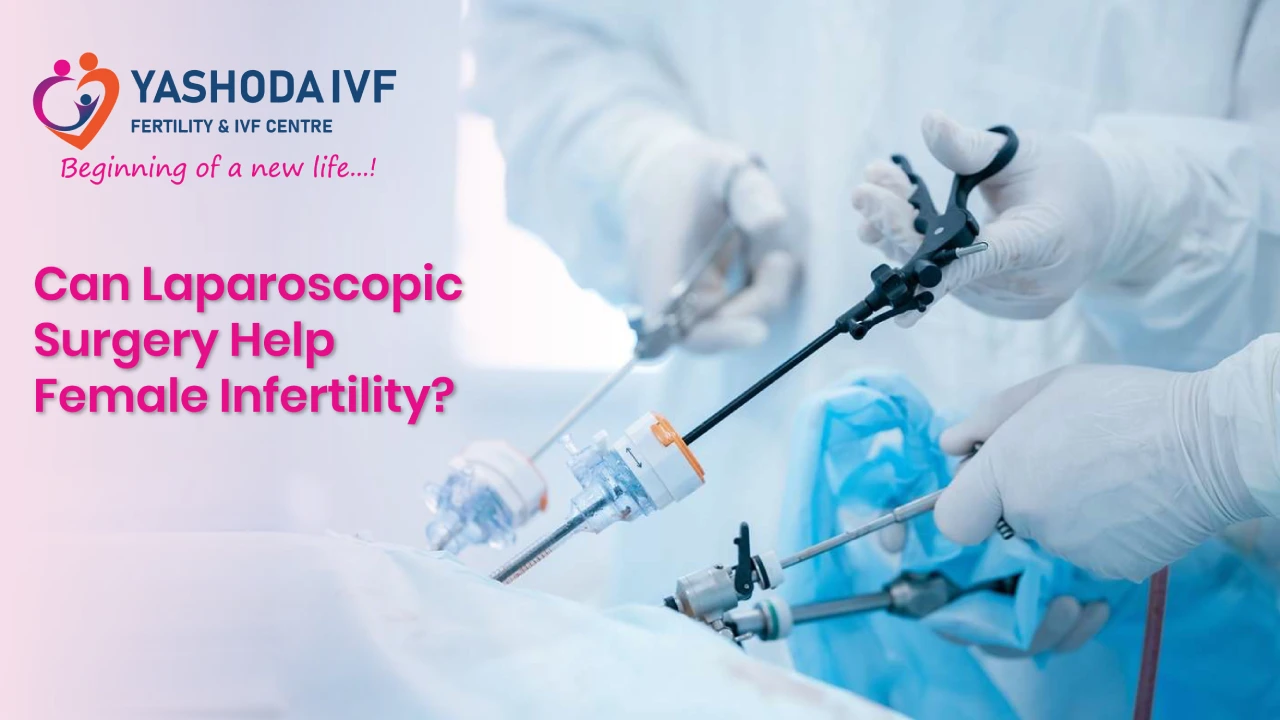
Laparoscopic surgery, also called keyhole or minimally invasive surgery, is a technique that lets a surgeon access the abdominal and pelvic cavity through tiny incisions rather than one large cut. A thin, lighted camera called a laparoscope is inserted through a small opening near the navel, projecting a magnified, real-time view of the reproductive organs onto a screen.
Unlike open surgery, laparoscopic surgery for infertility uses incisions that are usually less than a centimetre wide. This means less pain, minimal scarring, lower risk of infection, and a faster return to daily life. Crucially, it gives fertility specialists a direct, unfiltered view of the uterus, ovaries, and fallopian tubes, structures that scans like ultrasound or HSG cannot always capture in full detail.
Many fertility-related conditions stay completely invisible on routine imaging. Small endometriosis lesions, thin pelvic adhesions, or partially blocked tubes rarely show up on an ultrasound. A diagnostic laparoscopic surgery closes that gap by allowing the doctor to examine each organ in real time, physically.
During the procedure, a coloured dye is often passed through the fallopian tubes, a step called chromopertubation, to confirm whether they are open and healthy. If the dye flows freely, the tubes are clear; if it doesn’t, a blockage is identified on the spot. This level of accuracy is why diagnostic laparoscopy is frequently recommended for women with unexplained infertility, where every standard test appears normal, but conception still fails.
The biggest advantage is efficiency: in most cases, the surgeon can diagnose and treat the problem in the same sitting, sparing the patient a second operation.
Endometriosis occurs when tissue similar to the uterine lining grows outside the uterus, often on the ovaries, tubes, and pelvic walls. It triggers inflammation, scarring, and a hostile environment for eggs and sperm. Laparoscopic surgery is considered the gold standard for treating endometriosis; surgeons can remove, cauterise, or laser away these lesions, easing pain and significantly improving the odds of conception.
Blocked or damaged fallopian tubes prevent the egg and sperm from meeting. Through laparoscopic surgery, a specialist can open mild blockages, remove scar tissue restricting the tubes, or repair tubal damage. When the tubes are too severely damaged to repair, the findings help the fertility team move confidently toward IVF instead.
Ovarian cysts can interfere with ovulation and place mechanical pressure on nearby structures. An ovarian cystectomy performed via laparoscopic surgery removes the cyst while preserving the healthy ovarian tissue and the ovary itself. Because only a small incision is needed, patients experience far less pain and a quicker recovery compared with traditional surgery.
Uterine fibroids are non-cancerous growths that can distort the uterine cavity, block implantation, or cause heavy bleeding. A laparoscopic myomectomy removes these fibroids while keeping the uterus intact, a key consideration for women who still wish to conceive. This minimally invasive approach reduces blood loss and scar tissue formation compared with open removal.
Adhesions are bands of scar tissue, often caused by previous infections, surgeries, or endometriosis, that can bind organs together and disrupt normal reproductive function. Through laparoscopic surgery, the surgeon carefully separates and removes these adhesions, freeing the ovaries and tubes to function properly again.
For some women with polycystic ovary syndrome (PCOS) who don’t respond to medication, a procedure called laparoscopic ovarian drilling can help restore regular ovulation. Tiny punctures are made in the ovary to lower androgen production and encourage natural egg release.
If you want a clinical overview of the procedure and how it fits into a complete fertility plan, you can explore the laparoscopic surgery options offered by leading fertility centres.
For women who later pursue assisted reproduction, laparoscopic surgery can also create a healthier pelvic environment, which may improve IVF implantation and success rates.
Read this blog: What is Laparoscopy Cost in Mumbai/India: All details
This is one of the most common questions patients ask, and the honest answer is that it depends on the underlying cause of infertility.
Laparoscopic surgery is usually preferred when a correctable structural problem is suspected, for example, endometriosis, ovarian cysts, fibroids, or mild tubal damage. By fixing the root cause, it can restore the possibility of natural pregnancy.
IVF, on the other hand, is the better path when natural conception is unlikely even after correction, such as when both tubes are severely blocked, egg reserve is low, or there’s a significant male-factor issue.
In many real-world cases, the two work together: laparoscopy first corrects the problem, and IVF follows to maximise the chance of success. A fertility specialist can review your specific situation and recommend the right sequence. You can learn more about the full range of fertility procedures under our treatments.
Recovery after laparoscopic surgery is typically quick. Most women resume light activity within a couple of days, with stitches healing in one to two weeks. To support smooth healing and protect your fertility, doctors usually advise:
Your doctor will also explain the surgical findings and outline the next steps in your conception journey, whether that’s trying naturally or moving toward a fertility treatment.
Read this blog: What are the symptoms of blocked fallopian tubes
A consultation with an experienced fertility specialist is the best way to confirm whether this approach suits your needs. Expert teams such as those at Yashoda IVF can assess your case and design a personalised treatment plan.
Laparoscopic surgery has transformed the way doctors diagnose and treat female infertility. By offering a clear, real-time view of the reproductive organs and the ability to correct problems in the very same procedure, it gives couples both answers and solutions with minimal discomfort and downtime. Whether the goal is to conceive naturally or to prepare the body for IVF, laparoscopic surgery remains a safe, effective, and often life-changing step on the path to parenthood.
If you’ve been struggling to conceive and standard tests haven’t provided clarity, speaking with a fertility expert about laparoscopic surgery could be the turning point in your journey.
Not always, but it is highly valuable when scans don’t explain infertility or when a pelvic condition like endometriosis or tubal blockage is suspected. It allows doctors to both diagnose and treat in one procedure.
Most women recover within a few days, as it is a minimally invasive, often outpatient procedure. Full healing of the incisions usually takes one to two weeks.
Yes. If the surgery successfully corrects the underlying issue, such as removing endometriosis or clearing a mild tubal blockage, many women conceive naturally within a few months.
Pain is generally mild because the incisions are very small. Some soreness or shoulder discomfort from the gas used during the procedure is common but resolves quickly.
It depends on your diagnosis. Laparoscopic surgery is ideal for correctable structural problems, while IVF is better when natural conception is unlikely. Often, both are used together for the best outcome.
Disclaimer: The information provided in this blog is for educational and informational purposes only and is not intended as a substitute for professional medical advice, diagnosis, or treatment. Every individual’s fertility journey is unique.